There's a crack you've been keeping an eye on. A hairline running down the poured basement wall, a stair-step line working through the brick, or the one near the wall-floor joint that looks a little wider than it did last fall. Foundation crack repair in Wichita should start with the question you actually want answered — does this crack matter? — and the honest headline is that most foundation cracks are not structural. The difference is readable, and it's measurable. Wichita Foundation Repair Co handles crack evaluation, epoxy and polyurethane injection, and crack monitoring for homes and commercial buildings across Wichita, Sedgwick County, and roughly 30 miles around, starting with a free estimate built on measurements instead of a sales script.
Crack Triage: Which Cracks Matter and Which Ones Can Wait
The basement wall crack repair Wichita homeowners actually need starts with reading the crack, not selling one. The plain rules: hairline vertical cracks in poured concrete are usually curing shrinkage — concrete shrinks as it cures and relieves that stress in thin vertical lines. Seal them, note the date, move on. The assess list is different: a horizontal crack in a basement wall, which points to lateral soil pressure and borders on bowing wall repair territory; stair-step cracks in block or brick that are widening; any crack wider than about 1/4 inch; edges that have sheared or offset so one side sits proud of the other; and the classic reason people finally pick up the phone — a crack in the basement wall that keeps getting bigger. A widening crack is the wall reporting active soil forces; a stable crack is history. Movement is measurable, not guessable, which is why any company should show you measurements before it shows you a contract. Not sure which kind you're looking at? A foundation inspection puts numbers on it, and our guide to the signs of foundation problems walks the full symptom list.
Epoxy vs. Polyurethane Injection: Two Different Jobs
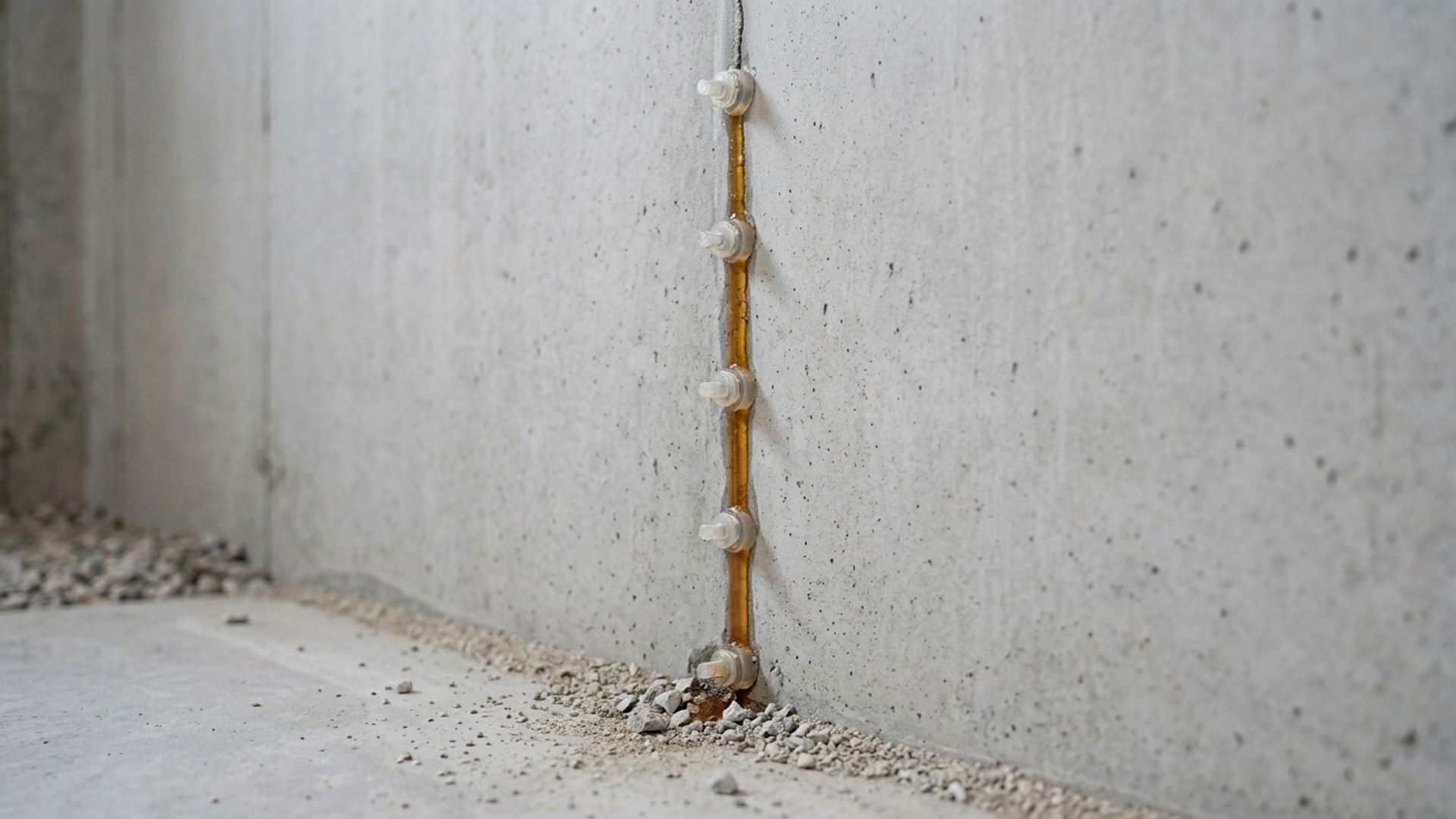
Ask about epoxy crack injection in Wichita and you'll mostly hear "we fix cracks." The chemistry matters more than that, because the two resins do different jobs. Epoxy injection is structural: injected under pressure, it fills the crack to full depth and cures rigid, welding the two faces of a poured wall back into a single piece and restoring the concrete's strength. It's the right call for a stable structural crack that has finished moving. Polyurethane injection is a water seal: an expanding foam that chases moisture along the crack's own path, fills the voids behind it, and stays flexible enough to ride out slight seasonal movement. It's the right call for a leaking crack. Two honest caveats come with both. Injection fixes the crack, not the cause — a crack driven by active settlement or wall pressure gets injected only after the movement is addressed, or it simply returns beside the repair. And block (CMU) walls with hollow cores generally aren't injection candidates the way poured walls are; resin disappears into the cores, so cracked block calls for a different approach entirely.
Crack Monitoring: The Repair You Might Not Need Yet
For cracks that don't meet the repair thresholds, the right move is often to watch, not spend. A crack gauge fixed across the crack and dated photos, re-checked across a wet season and a dry one, tell you whether the crack is actually moving before anyone commits repair money. If the gauge holds steady through an October rain cycle and a bone-dry August, the crack is history — seal it at most. Monitoring costs almost nothing, and a company confident in its measurements can afford to recommend it. The commissioned-inspection model can't, which is exactly why you rarely hear it offered.
Why Wichita Foundations Crack
Sedgwick County sits on expansive smectite clays — Tabler silty clay loam, USDA hydrologic group D, the highest shrink-swell class the classification has. Summer drought shrinks that clay away from footings, opening gaps, fresh cracks, and sticking doors; the fall rains re-swell the soil unevenly and widen what summer opened, which is why crack activity here peaks around October. River-adjacent and older neighborhoods — Riverside, College Hill, Delano — stack 1880s–1930s unreinforced masonry and early-concrete basements on top of that cycle, with decades of accumulated movement already in the walls. The seasonal open-close rhythm is also why "it got bigger, then seemed to close back up" is normal physics here rather than a mystery — and why activity, not appearance, is the metric that decides what a crack needs.
What Crack Repair Costs in Wichita
In the Wichita market, minor foundation crack repair — injection of a stable or leaking crack — typically runs $250 to $800, and structural crack repairs run $500 to $2,500. The drivers are the crack's width and length, poured wall versus block, whether water is moving through it, and whether the crack is a symptom of settlement or wall pressure — which changes the project entirely and puts it in a different price class. Treat every number above as market data, because that's what it is. The only price we put our name on is a free written estimate, with the measurements that produced it on the page.
When a Crack Is More Than a Crack
Sometimes the crack is the messenger. If it arrives alongside sloping floors, doors that no longer latch, or stair-step patterns spreading across more than one wall, the project isn't injection — it's settlement work: elevation surveys, pier systems, and structural diagnosis, all of which live on our foundation repair page. Either way, the first step is the same measured evaluation. We handle crack work across Wichita, Sedgwick County, and roughly 30 miles in every direction, including Newton, Derby, Maize, and the towns between. Call (316) 330-0156, Monday through Saturday, 8:00 AM to 6:00 PM, or Get a Free Estimate — and bring your questions, because the measurements will answer most of them.